
 English
 Русский язык

On February 27th, Xiaomi officially launched the much-anticipated SU7 Ultra, with a final production price of ¥529,900 ($52,990). The car had an initial pre-sale price of ¥814,900 ($81,490) and offers an additional optional racing package worth ¥100,000 ($10,000). The exclusive Nürburgring limited edition, priced at ¥814,900, is expected to create a buzz in the market. This article delves into the product’s technical strengths and value propositions.
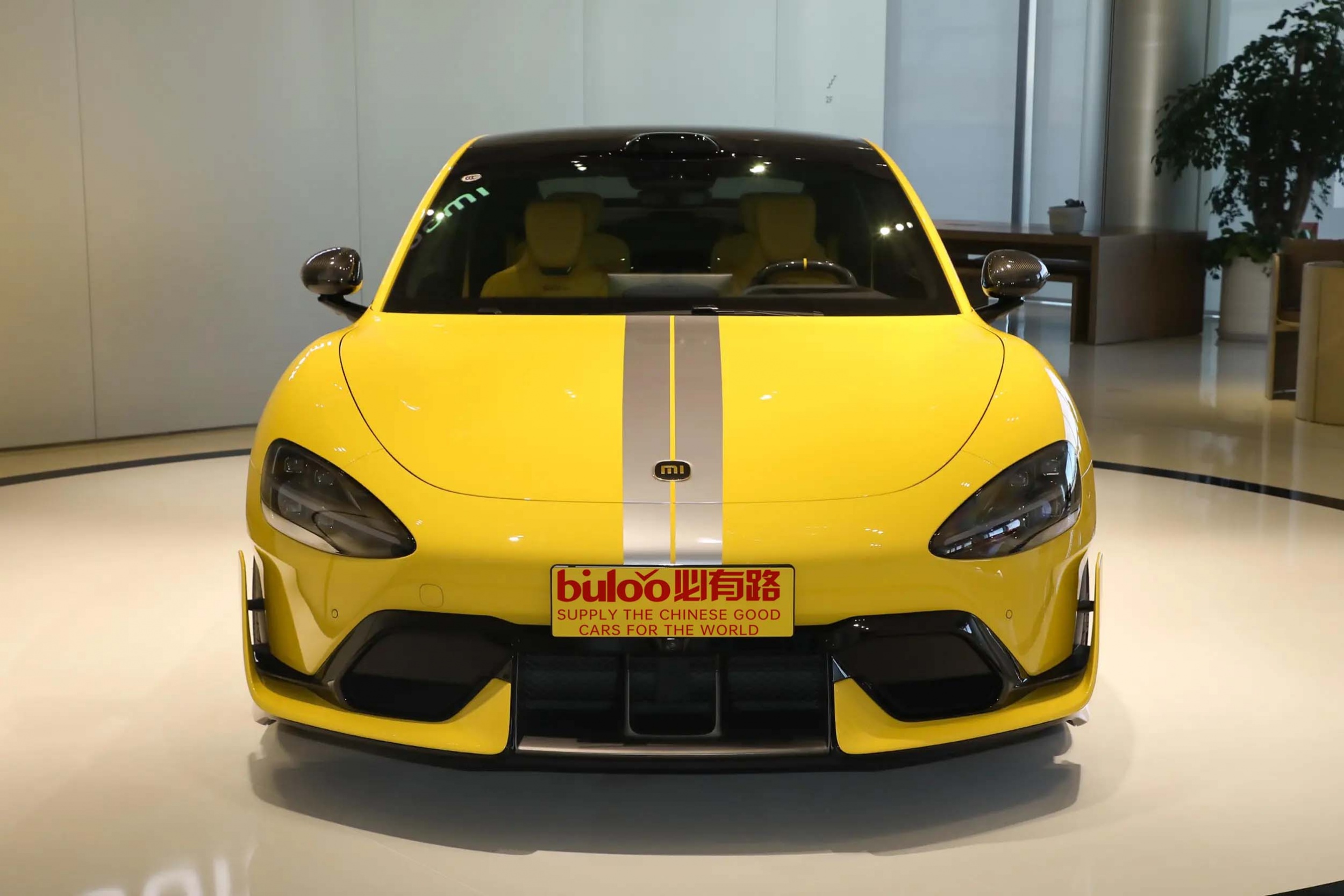
Technical Breakthroughs and Design Innovations: Redefining Performance Limits
Although the SU7 Ultra shares its foundation with the Xiaomi SU7, the Ultra variant features extensive race-focused modifications, similar to the difference between the Audi A4 and RS4. These changes include a significant upgrade in power and performance.
The SU7 Ultra is equipped with a triple-motor system—two V8 motors and one V6 motor—delivering a total output of 1548 horsepower. It accelerates from 0 to 100 km/h in just 1.98 seconds (excluding launch time) and from 0 to 200 km/h in 5.96 seconds. The car’s top speed is 350 km/h, with a tested maximum speed of 359.71 km/h. The battery, a special racing-grade battery from CATL, has a capacity of 93.7 kWh, offering a range of 630 km according to CLTC standards. It supports ultra-fast 5.2C charging, taking just 11 minutes to charge from 10% to 80%. With a peak discharge power of 1330 kW (1808 horsepower), the battery can handle the high power demands of the three-motor setup.
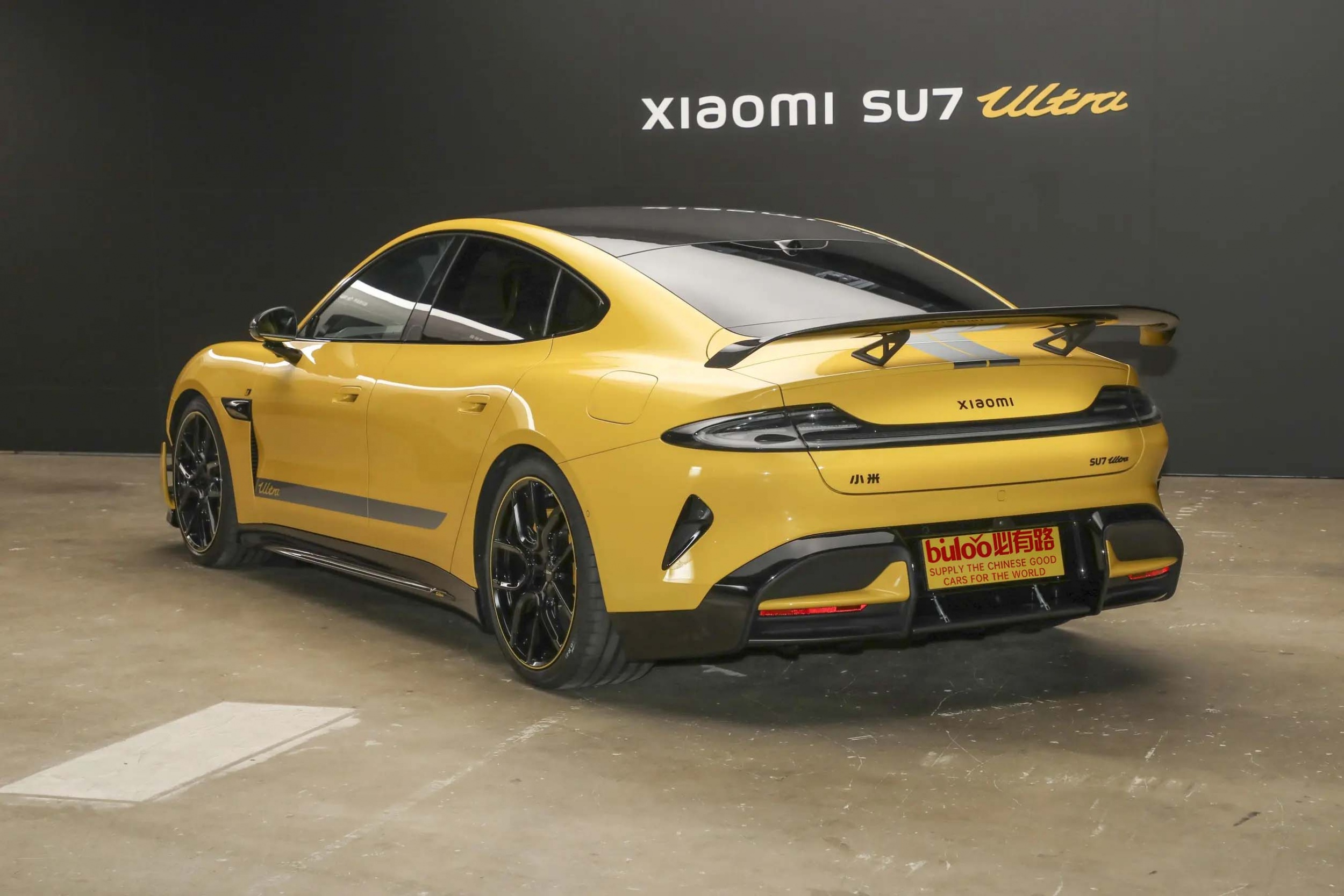
The vehicle has undergone significant weight reduction, incorporating carbon fiber in 17 areas, reducing weight by 57 kg. The carbon fiber roof alone covers 1.7 square meters. Paired with carbon-ceramic brake discs (front 430 mm/rear 410 mm) and Akebono six-piston calipers, the car boasts an impressive stopping distance of just 30.8 meters—significantly improved over the standard SU7.
In terms of aesthetics and interior design, the SU7 Ultra features a striking lightning yellow paint with silver decals, exaggerated U-shaped front splitter, active diffuser, and a 1560mm carbon fiber rear wing. At 350 km/h, the car generates 400 kg of downforce with a drag coefficient of just 0.195. Inside, the car is equipped with an Alcantara steering wheel, carbon fiber trim, race-inspired embroidered seats, and yellow safety belts. The front seats are optimized for comfort with adjustable firmness, while the rear seats have been extended for better comfort.
Balancing Performance with Practicality
Despite its racing focus, the Xiaomi SU7 Ultra does not neglect daily usability. It is equipped with a laser radar system, 11 cameras, 12 ultrasonic radars, and 3 millimeter-wave radars, supporting the Xiaomi Pilot Max advanced driver-assistance system (L2). The car is powered by dual Nvidia Orin-X chips, delivering 508 TOPS of computing power to support features such as adaptive cruise control and automatic parking. The car also features the 'Track Master' app, allowing real-time tracking of lap times, track maps, and steering angles. Additionally, a sound simulation system mimics the roar of a gasoline-powered supercar, enhancing the driving experience.

Pricing Strategy: Why Is It Priced at ¥529,900?
Is the Xiaomi SU7 Ultra expensive? Yes, but its pricing strategy makes it appealing to consumers. While other high-performance vehicles are available, Xiaomi managed to generate significant buzz for the SU7 Ultra through strategic pricing and marketing.
During pre-launch, Xiaomi set high expectations for the car, with an initial price tag of ¥814,900. The SU7 Ultra boasts unique technical features, including the world’s highest RPM motor (V8s with a maximum speed of 27,200 RPM) and an in-house developed three-motor torque vectoring control system. Xiaomi also mentioned that the hardware costs made up over 60% of the car’s production cost—around ¥500,000 ($50,000) per unit. With the final price set at ¥529,900, the car appears more affordable, encouraging consumer engagement.
Xiaomi’s strategy includes offering different variants: the ¥529,900 standard model to drive mass sales and the ¥814,900 Nürburgring limited edition to enhance exclusivity and prestige. This dual-pricing strategy positions the SU7 Ultra to compete with high-end brands like Porsche and Tesla, focusing on track performance as the key differentiator. The car’s outstanding acceleration and lap times—such as a Nürburgring time of 6 minutes 46.874 seconds—help position the SU7 Ultra as a serious contender in the performance car market.
Market and Competitor Analysis: Can Xiaomi Outsmart International Giants?
The Xiaomi SU7 Ultra is positioned against competitors like the Tesla Model S Plaid, Porsche Taycan Turbo GT, and Zeekr 001 FR. In most parameters, including power, torque, and energy efficiency, the SU7 Ultra outperforms its competitors. Additionally, Xiaomi’s vehicle offers a higher top speed and lower energy consumption. While Tesla’s FSD system isn’t fully operational in China, Xiaomi's ADAS and track-focused features make it a serious competitor. Meanwhile, the Porsche Taycan Turbo GT’s much higher price point sets it apart from Xiaomi’s offering, while the Zeekr 001 FR, once in the same category, is now less competitive due to the SU7 Ultra’s lower price.
Price and Market Penetration: Aiming for 10,000 Units Annually
Xiaomi aims to sell 10,000 units of the SU7 Ultra annually. At ¥529,900, the car has a larger potential customer base, particularly among 30-45-year-old males with annual incomes exceeding ¥1,000,000 ($100,000). This target group includes Tesla and Porsche owners, with a significant portion of them inclined to embrace a domestic alternative.

However, Xiaomi's production capacity is limited due to the reliance on imported carbon fiber components and slow ramp-up of battery production. The initial monthly production is set at around 500 units, which may create challenges in meeting demand. Furthermore, Xiaomi is adopting a 'scarcity marketing' strategy, which could impact sales in the short term.
Xiaomi's “tech democratization” approach to the high-end market faces challenges in overcoming perceptions of “high price ≠ high-end,” with CEO Lei Jun's personal branding likely to play a key role in breaking through.
Conclusion: A High-Stakes Gamble or a Revolutionary Step?

The Xiaomi SU7 Ultra marks a significant shift in China’s automotive industry, from focusing on 'high specifications' to 'high performance.' With its competitive pricing, the car has the potential to redefine the landscape of domestic performance vehicles. If Xiaomi achieves its goal of selling over 10,000 units annually, it could mark the rise of Chinese performance cars on the global stage.












 Whatsapp-Maggie
 Email
Email